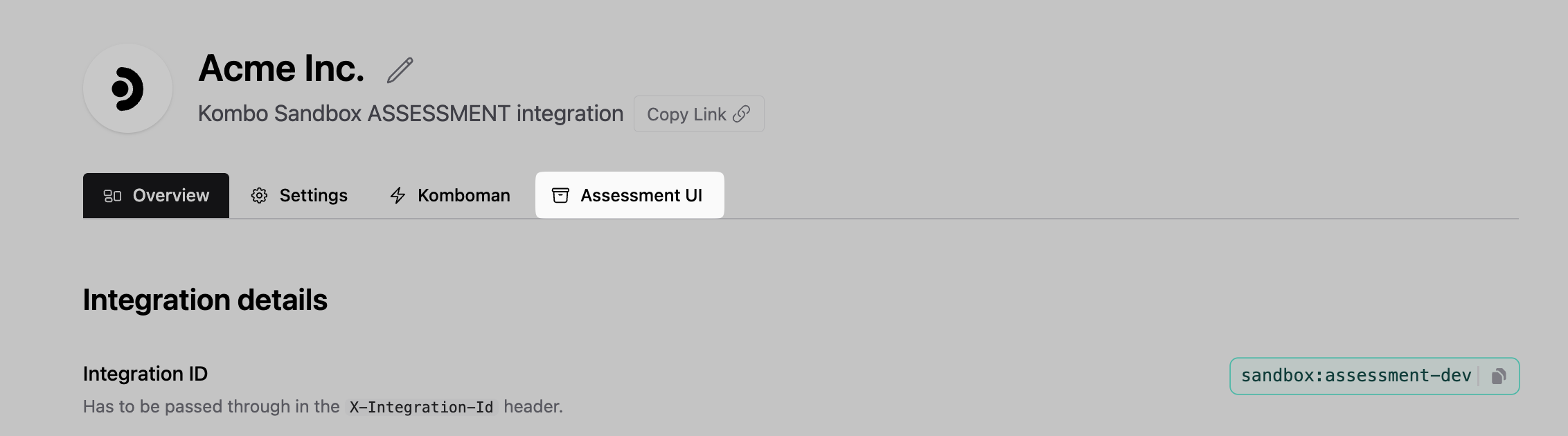
The Assessment UI is a visual interface in the Kombo dashboard that allows you to view assessment packages, track orders, and inspect order details for your assessment integrations.This makes it easy to debug issues, monitor assessment order statuses, and
verify that your integration is working correctly.
Below are the key features available in the Assessment UI.
View packages and orders
View order details
View activity logs
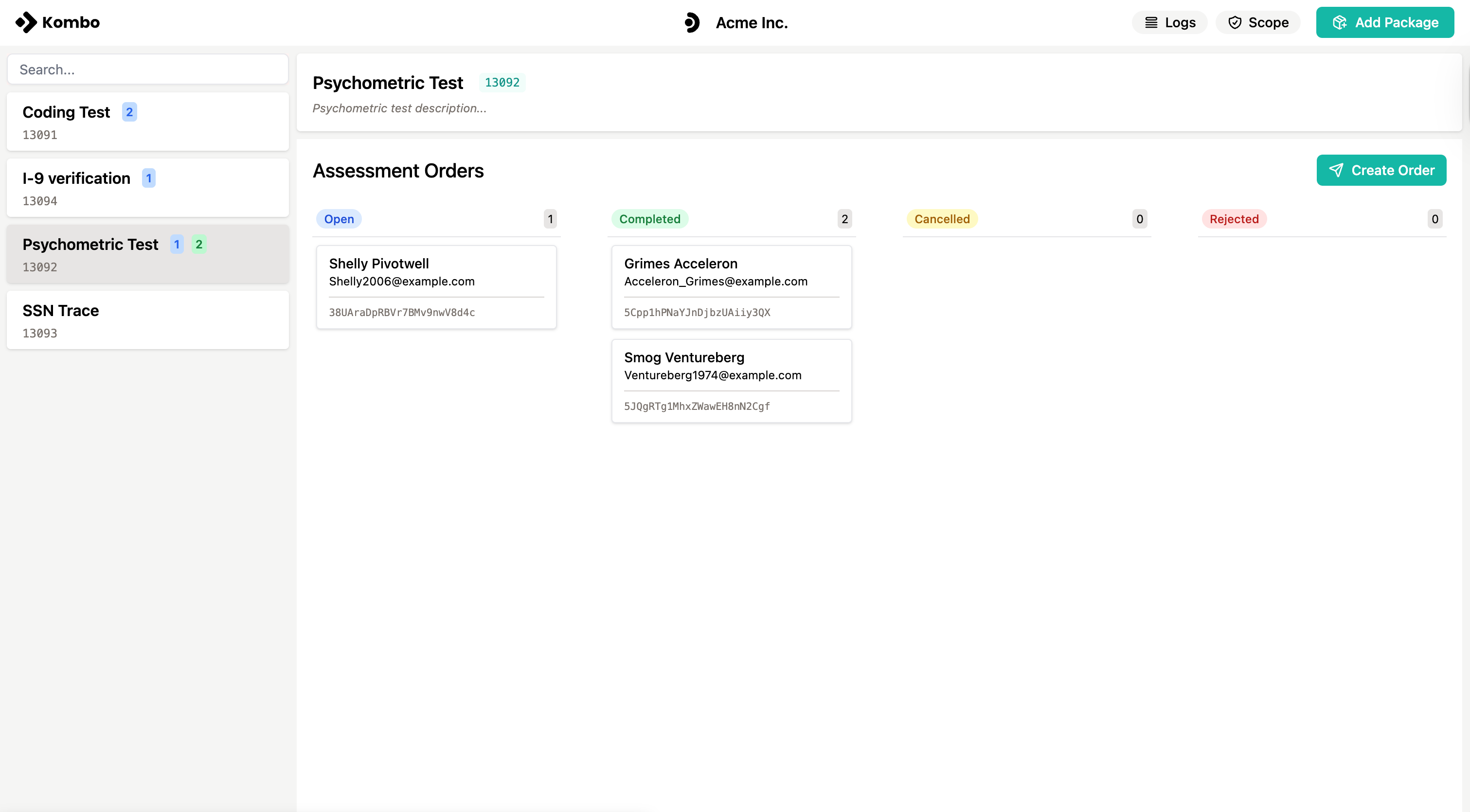
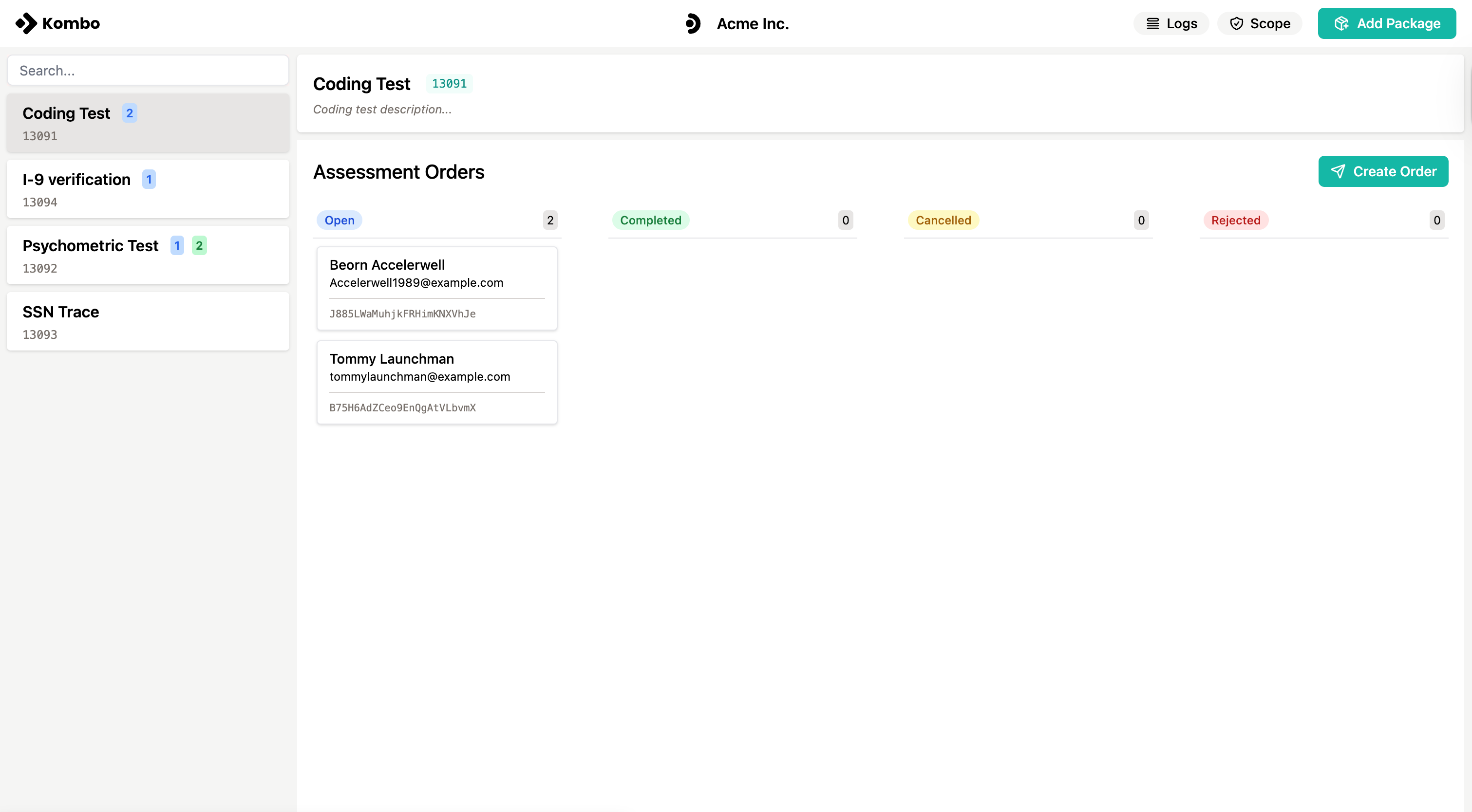
The Assessment UI displays all assessment packages for an integration in a
sidebar. Clicking on a package will reveal its orders organised by their
status.
Packages and orders
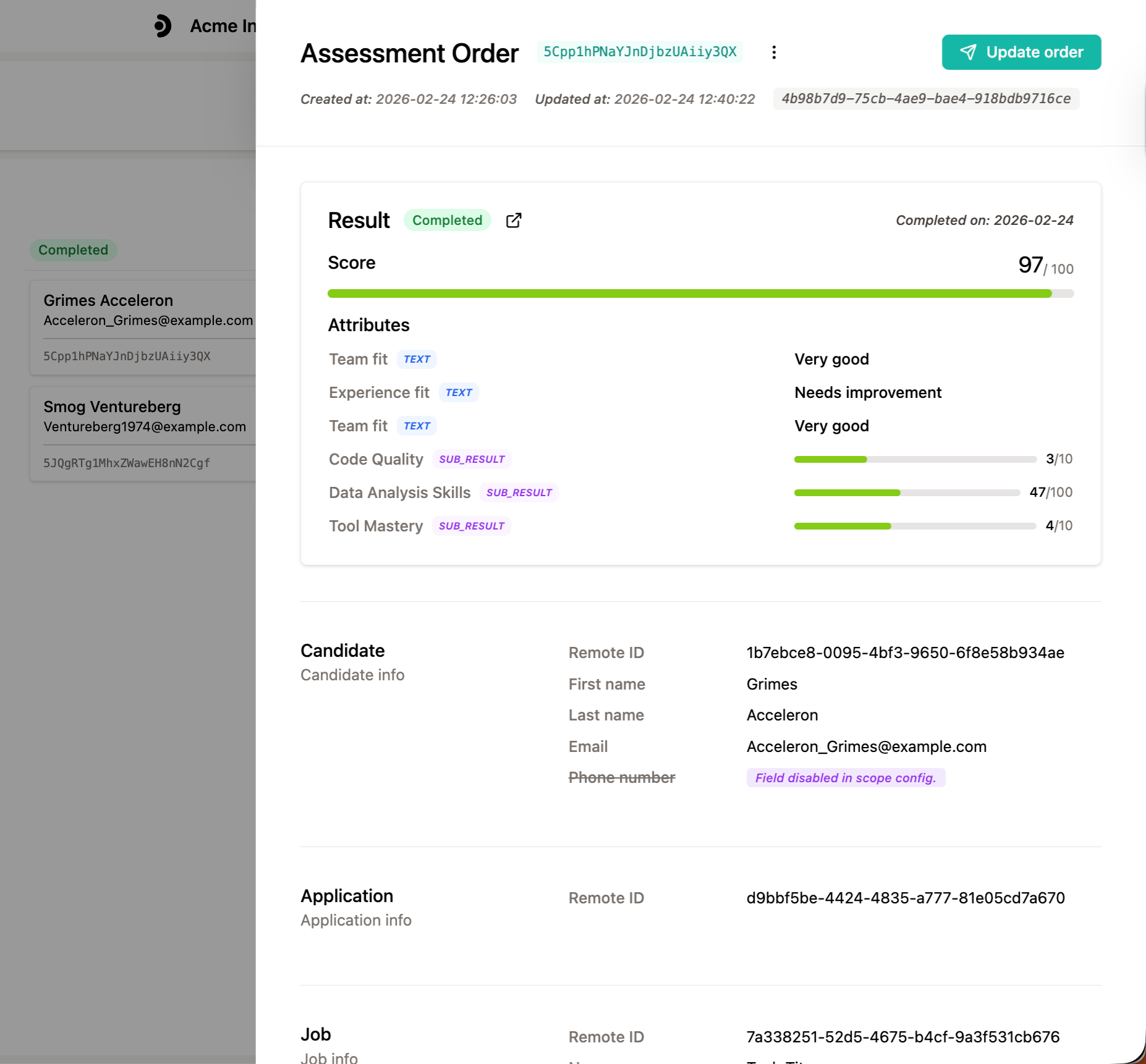
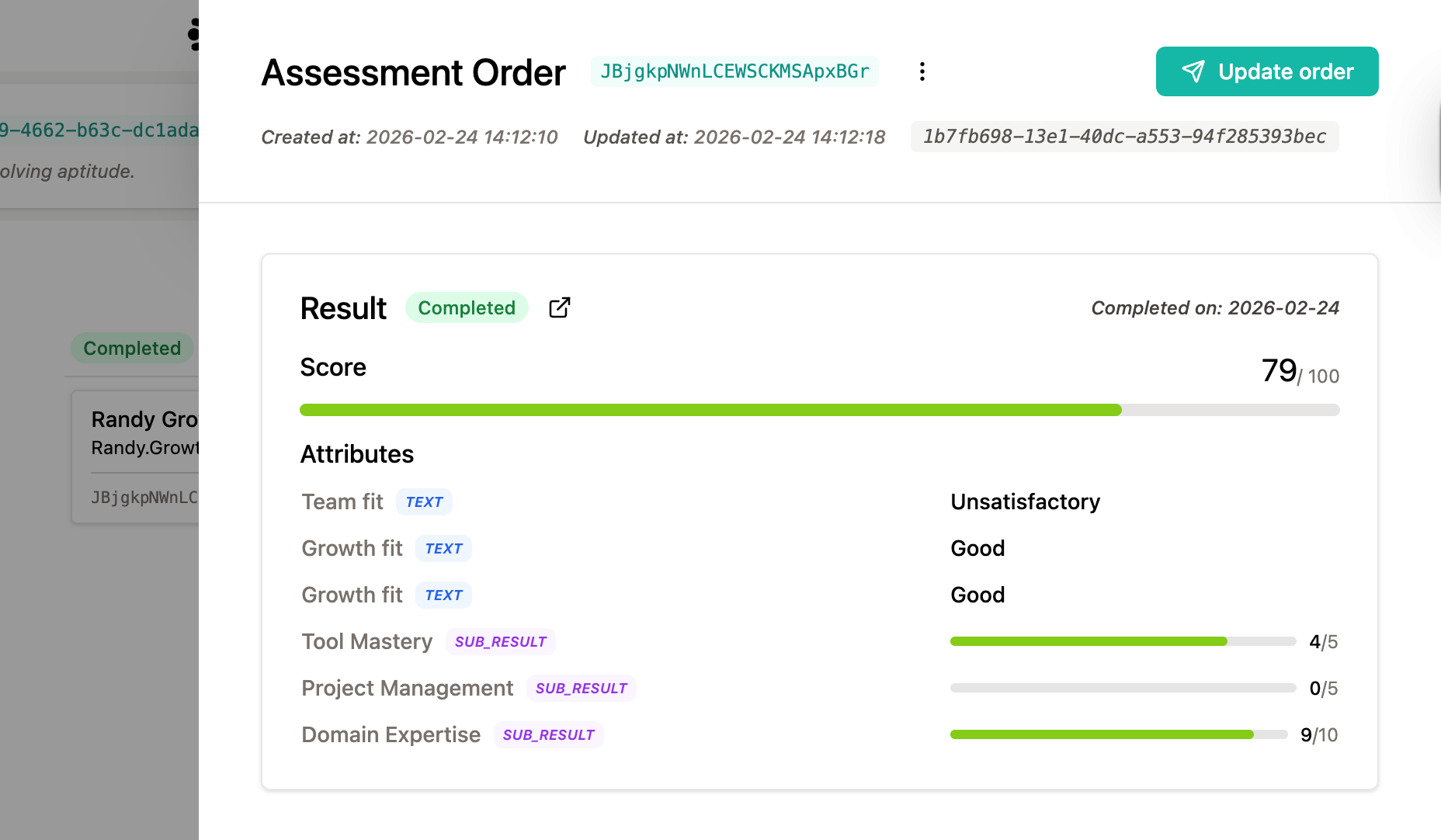
Clicking an order opens a sliding drawer that contains the order’s details
including the data points contained in the order, the coverage status of the
models and their data points, and the order’s result.
Order details
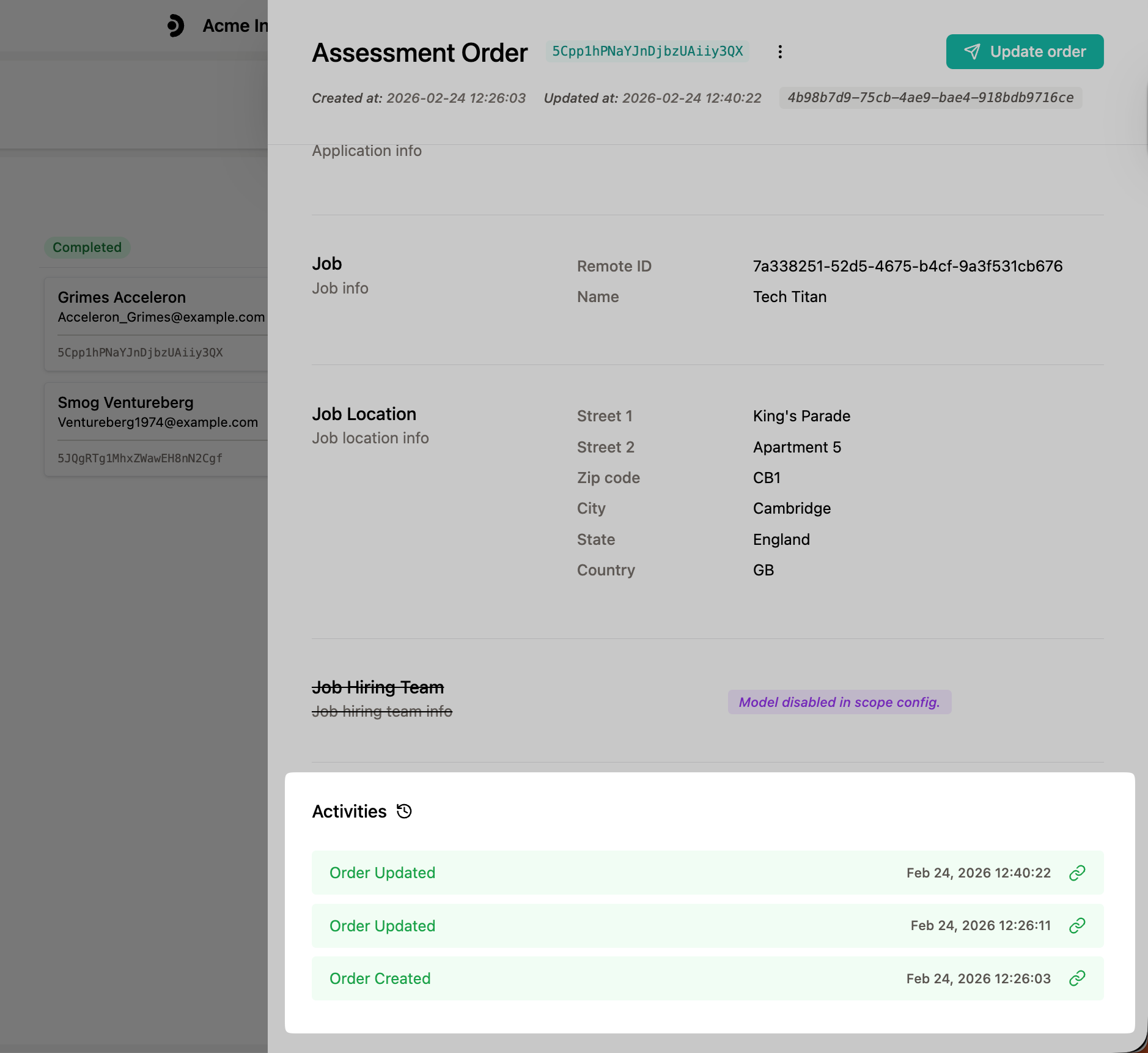
Each order displays an activity timeline showing all interactions (create
and update events). Each activity entry will link you to Kombo’s
Logs page.
The sandbox integration is built on top of the Assessment UI, and it aims to speed up your development by testing Kombo’s Assessment API end-to-end without needing access to a real ATS.
Use the Assessment Sandbox as your primary development environment to iterate
quickly and test the full lifecycle: creating packages, receiving orders via
webhooks, and submitting results.
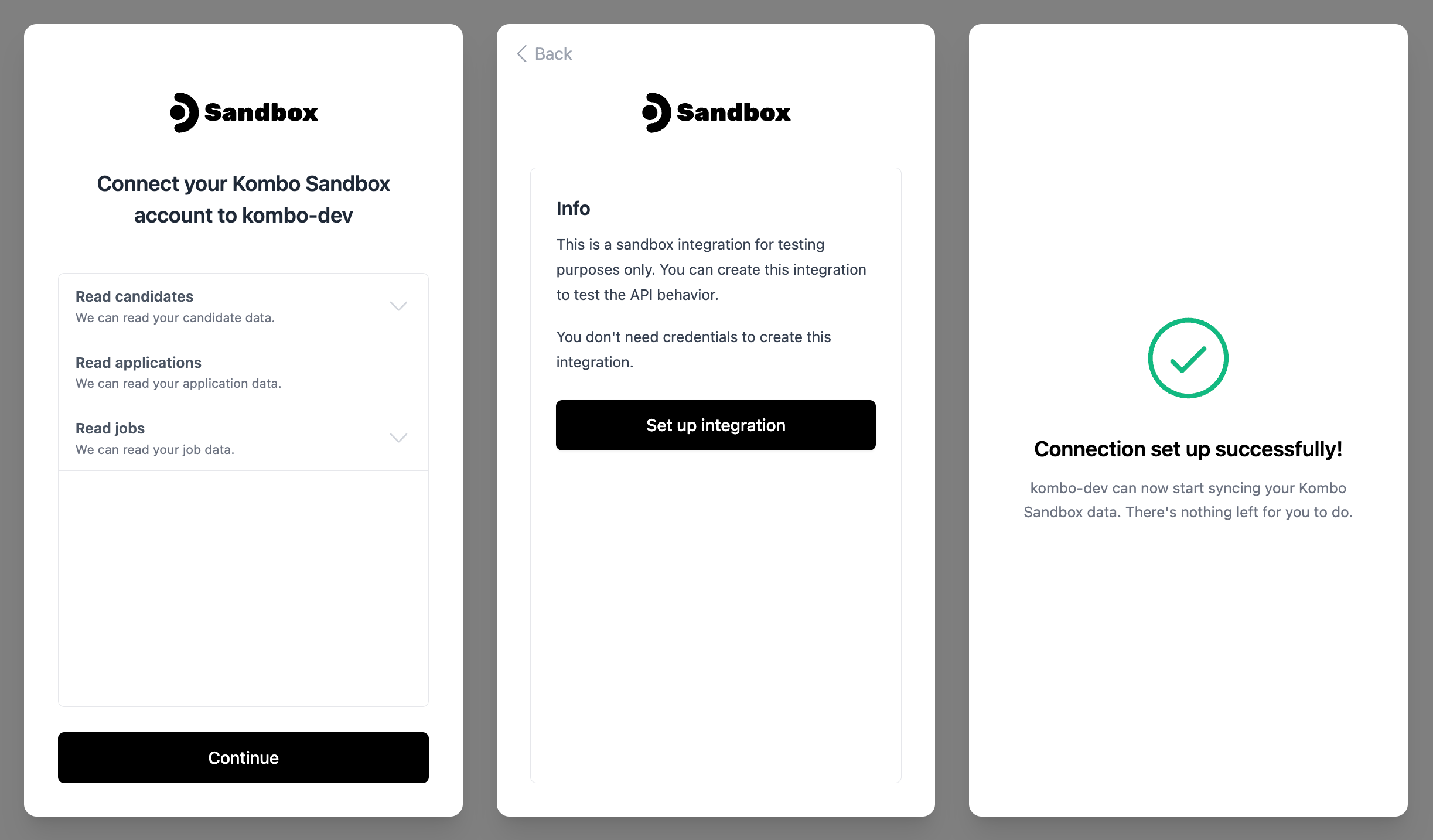
Go to the Kombo dashboard (development
environment), create a new integration, and select the Assessment Sandbox.
Sandbox integration connection flow
3
Create packages
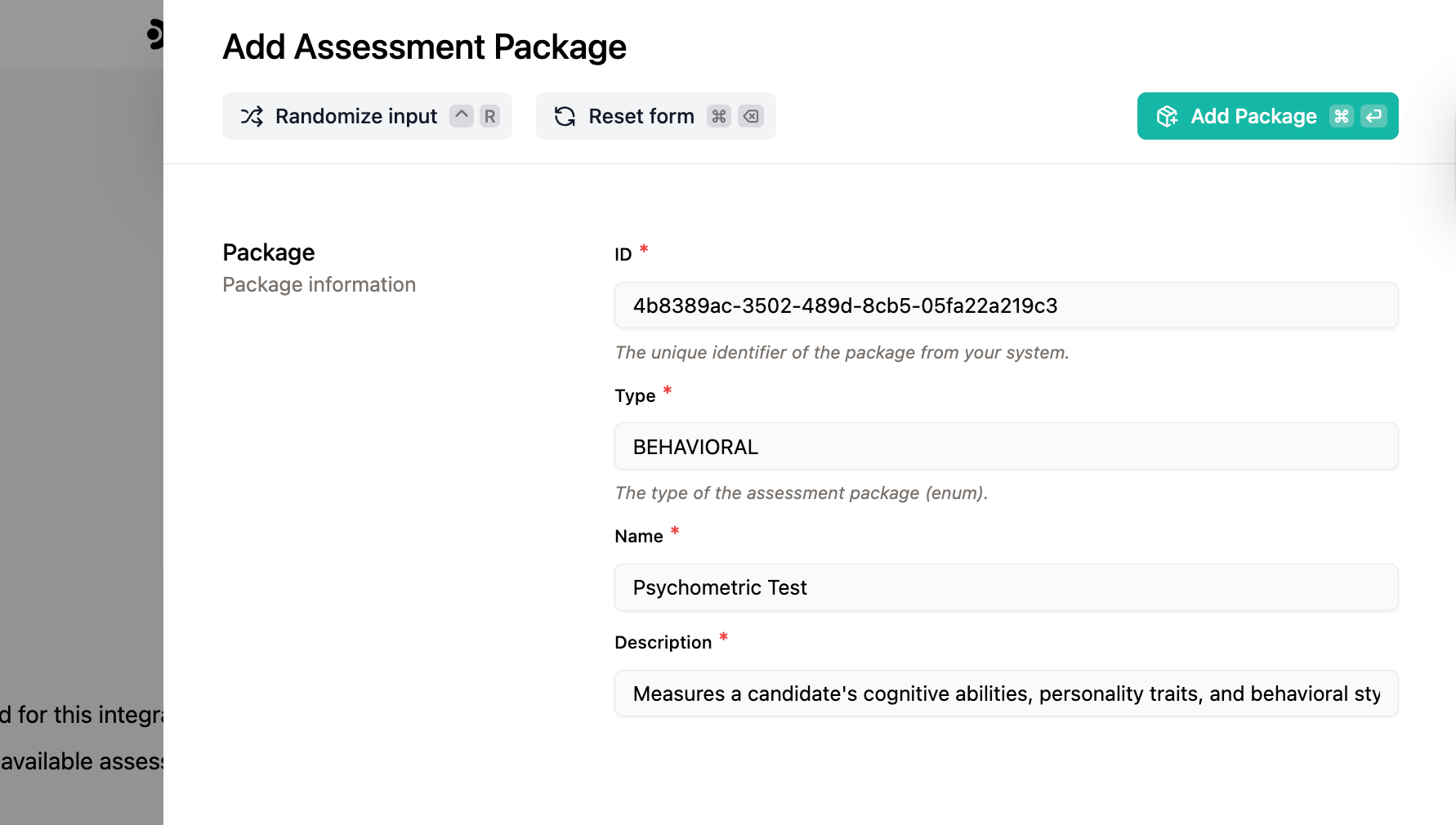
Click the “Add Package” button to open the package creation form.
You can also create packages programmatically via the Set
Packages endpoint. This is useful when you
want to automate your test setup.
4
Trigger orders
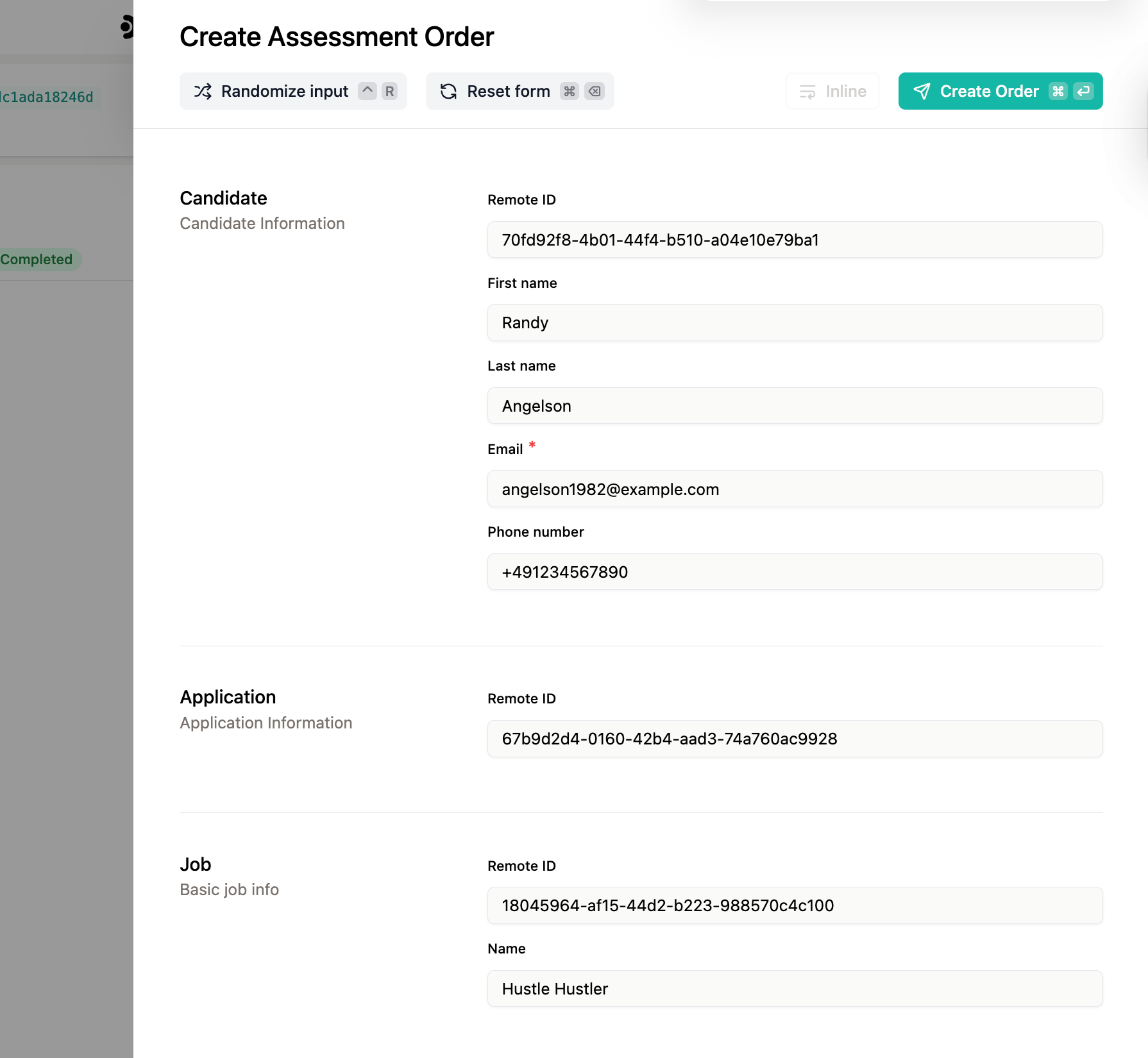
Select a package, and click the “Create Order” button to open the
order form.
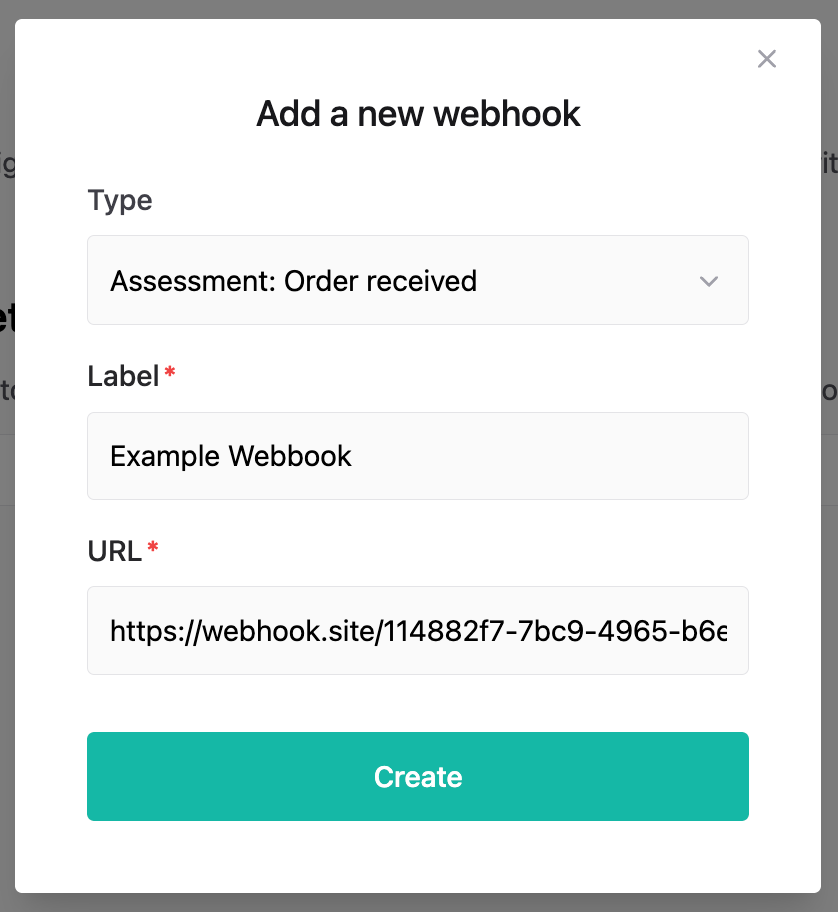
Creating an order triggers the Assessment Order
Received webhook,
which you should have configured in the dashboard. This is the same webhook
you will receive from a real ATS integration, so you can develop your
webhook handler against it with confidence.
5
Process order and update result
Once an order is triggered through the UI, your application should receive
the new order webhook, process the order, and call the Update Order
Result endpoint to
submit the result.
6
Inspect the result
After the result is submitted, open the order’s details drawer to verify the
result looks correct.
Was this page helpful?
Assistant
Responses are generated using AI and may contain mistakes.