> ## Documentation Index
> Fetch the complete documentation index at: https://docs.kombo.dev/llms.txt
> Use this file to discover all available pages before exploring further.
# Investigate failing actions
> Diagnose failed write actions using Logs and Komboman.
While most actions succeed automatically, occasional failures are inevitable when syncing data with external systems. Strict validation rules, changing permissions, or complex data dependencies can sometimes cause requests to be rejected.
This guide introduces tools like [Logs](../../features/logs) and [Komboman](../../features/komboman) to help you isolate and understand the error.
## 1. Find the action in the logs
To find the relevant log entry, head to the [Logs page](../../features/logs) and use the filters on the top:
* **Type**: Select **Action** to see only write operations (excluding syncs and webhooks).
* **Status**: Select **Failed** to focus on the errors.
* **Integration**: Narrow down results to a specific customer connection.
* **Date**: If you know when the error happened, setting a time range helps filter out noise.
Once you've filtered the list, you should see the failed action.
## 2. Inspect the logs
Click on the log entry to open the detail view. This is your view for understanding what happened.
* **Review the input**: Check the `Incoming Request` tab to see exactly what data you sent to Kombo.
* **Inspect the requests**: An action often involves multiple HTTP calls to the remote tool. Check the timeline for any failed requests.
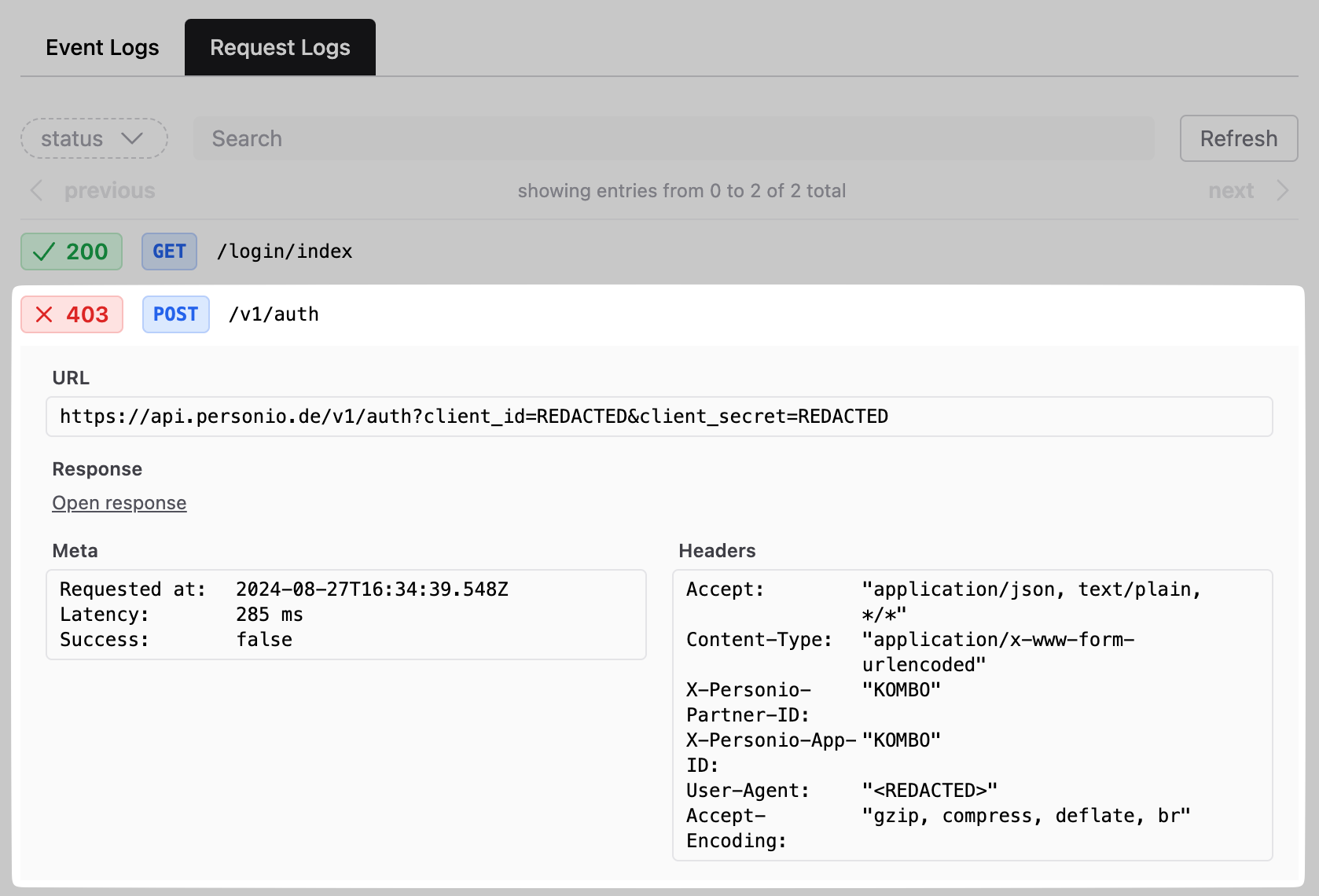
* **Dig deeper**: Click on a specific request in the timeline to see the raw payload Kombo sent and the error response from the remote system. These often contain more specific details than the top-level error message.
 ## 3. Common issues
We have a dedicated [Error Handling guide](/guides/errors) that covers how to handle common API errors programmatically. Below, you'll find visual examples of the most common issues specific to actions:
### Missing permissions or Invalid authentication
If you receive a `403 Forbidden` or `401 Unauthorized` error, the integration
likely lacks the necessary permissions or it's authentication is invalid. Below
are some examples of how these errors might look in the logs:
## 3. Common issues
We have a dedicated [Error Handling guide](/guides/errors) that covers how to handle common API errors programmatically. Below, you'll find visual examples of the most common issues specific to actions:
### Missing permissions or Invalid authentication
If you receive a `403 Forbidden` or `401 Unauthorized` error, the integration
likely lacks the necessary permissions or it's authentication is invalid. Below
are some examples of how these errors might look in the logs:
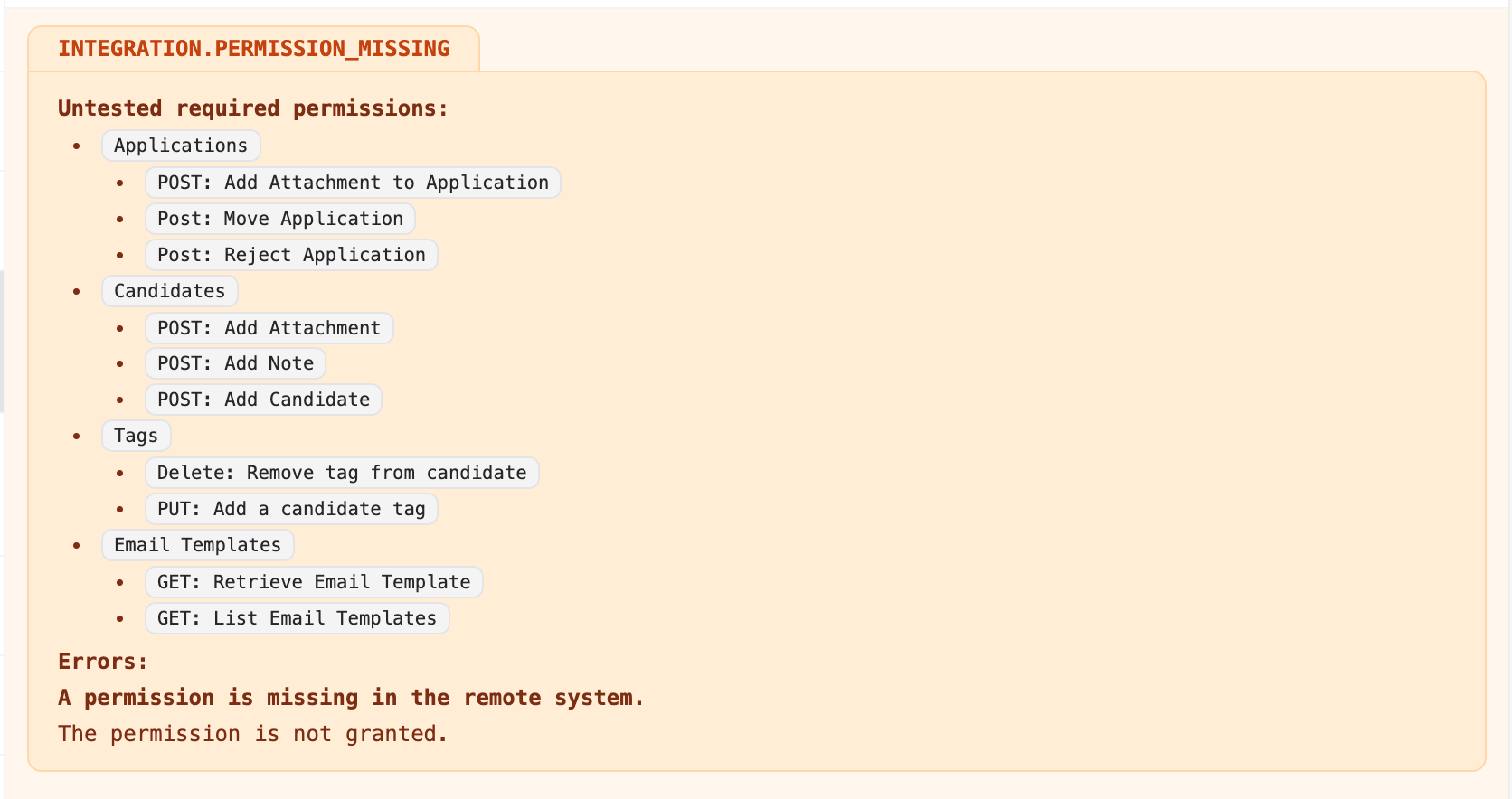
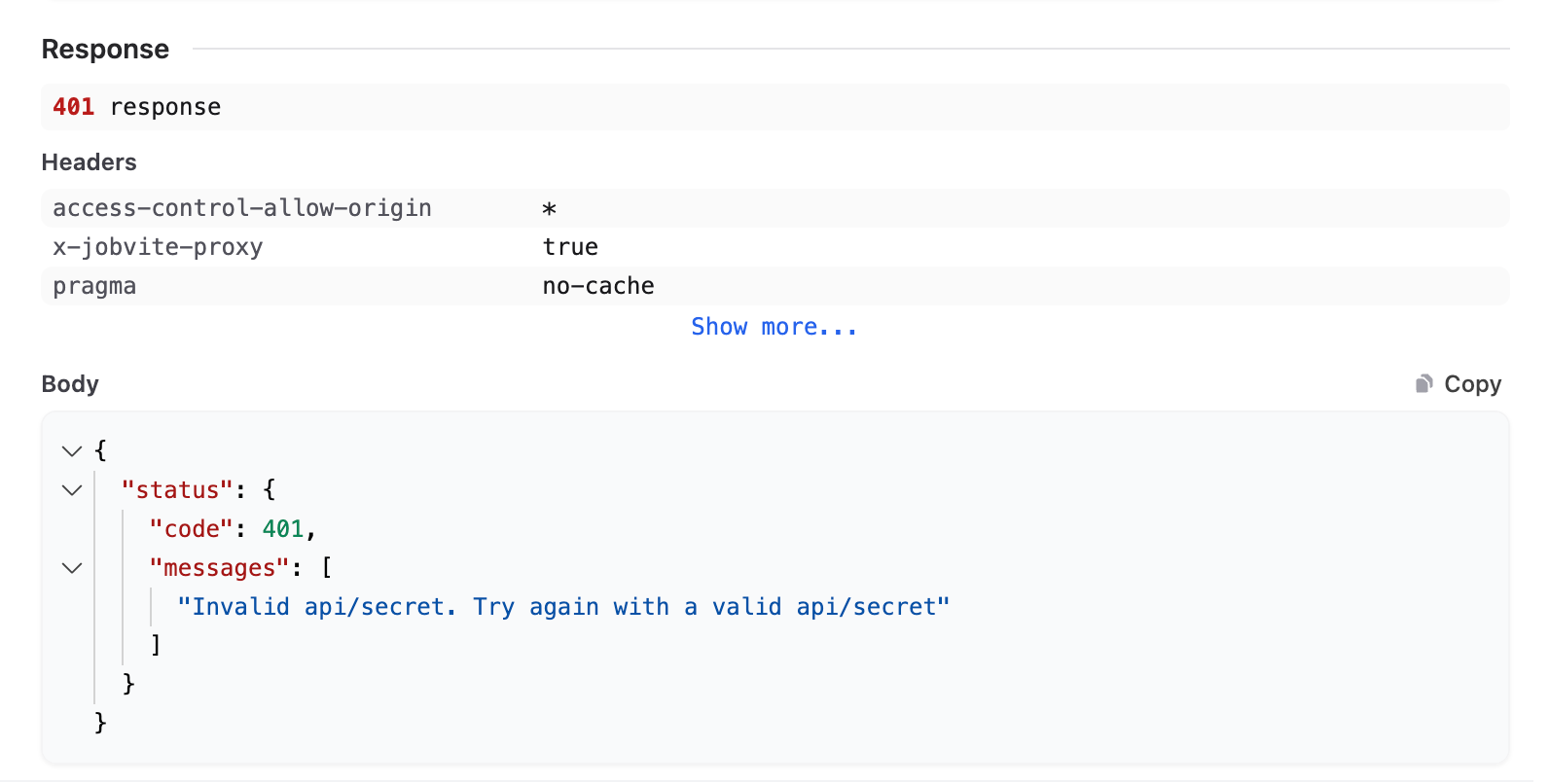 **Solution**: Identify the missing permission from the error message. Ask your
customer to check their settings or API key, as they might have revoked access
or changed their role. In some cases, they will need to [reconnect the
integration](../connect/reconnection) to grant the missing scopes.
### Invalid input
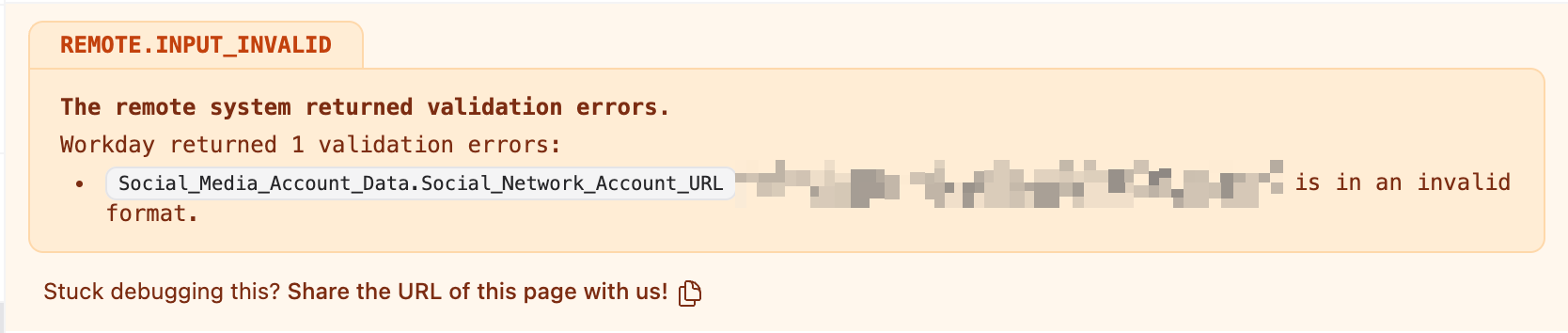
If the error is a `400 Bad Request`, `422 Unprocessable Entity`, or a validation
error, the remote tool rejected the data you sent. Below are some examples of
how these errors might look in the logs:
**Solution**: Identify the missing permission from the error message. Ask your
customer to check their settings or API key, as they might have revoked access
or changed their role. In some cases, they will need to [reconnect the
integration](../connect/reconnection) to grant the missing scopes.
### Invalid input
If the error is a `400 Bad Request`, `422 Unprocessable Entity`, or a validation
error, the remote tool rejected the data you sent. Below are some examples of
how these errors might look in the logs:

 **Solution**:
1. Identify the incorrect or missing data in the `Incoming Request` tab.
2. Use [Komboman](../../features/komboman) to replay the action with adjusted inputs and verify the fix.
3. Check the integration's **Field Report** (in the dashboard) to see which fields are required by the remote tool.
4. If a connection always requires specific static inputs, you can set up Remote field overrides.
### Logical errors (e.g., Job closed)
Sometimes the request is valid, but the operation cannot be performed due to the state of the remote system (e.g., applying to a closed job or creating a duplicate candidate). Below are some examples of how these errors might look in the logs:
**Solution**:
1. Identify the incorrect or missing data in the `Incoming Request` tab.
2. Use [Komboman](../../features/komboman) to replay the action with adjusted inputs and verify the fix.
3. Check the integration's **Field Report** (in the dashboard) to see which fields are required by the remote tool.
4. If a connection always requires specific static inputs, you can set up Remote field overrides.
### Logical errors (e.g., Job closed)
Sometimes the request is valid, but the operation cannot be performed due to the state of the remote system (e.g., applying to a closed job or creating a duplicate candidate). Below are some examples of how these errors might look in the logs:

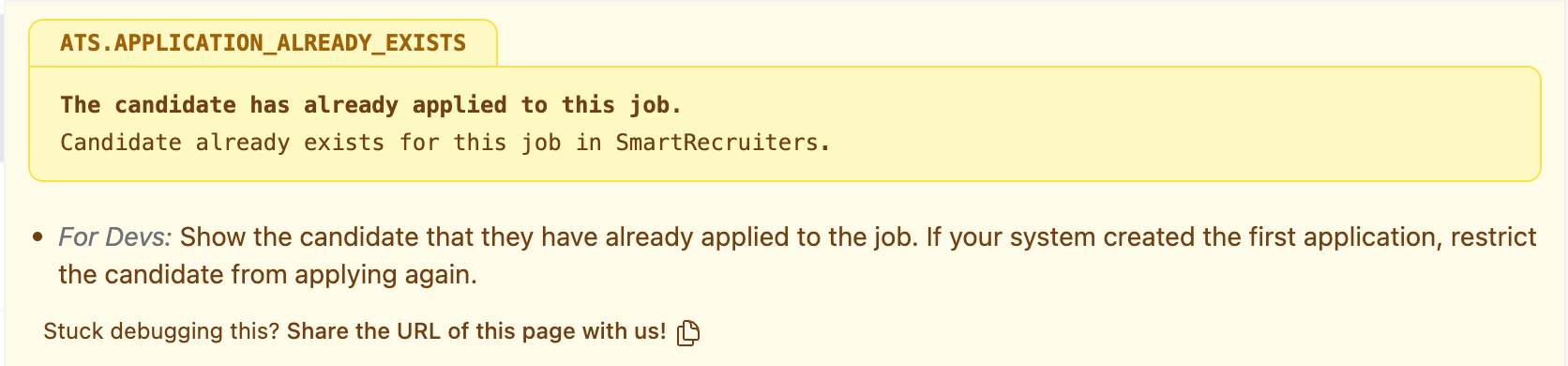
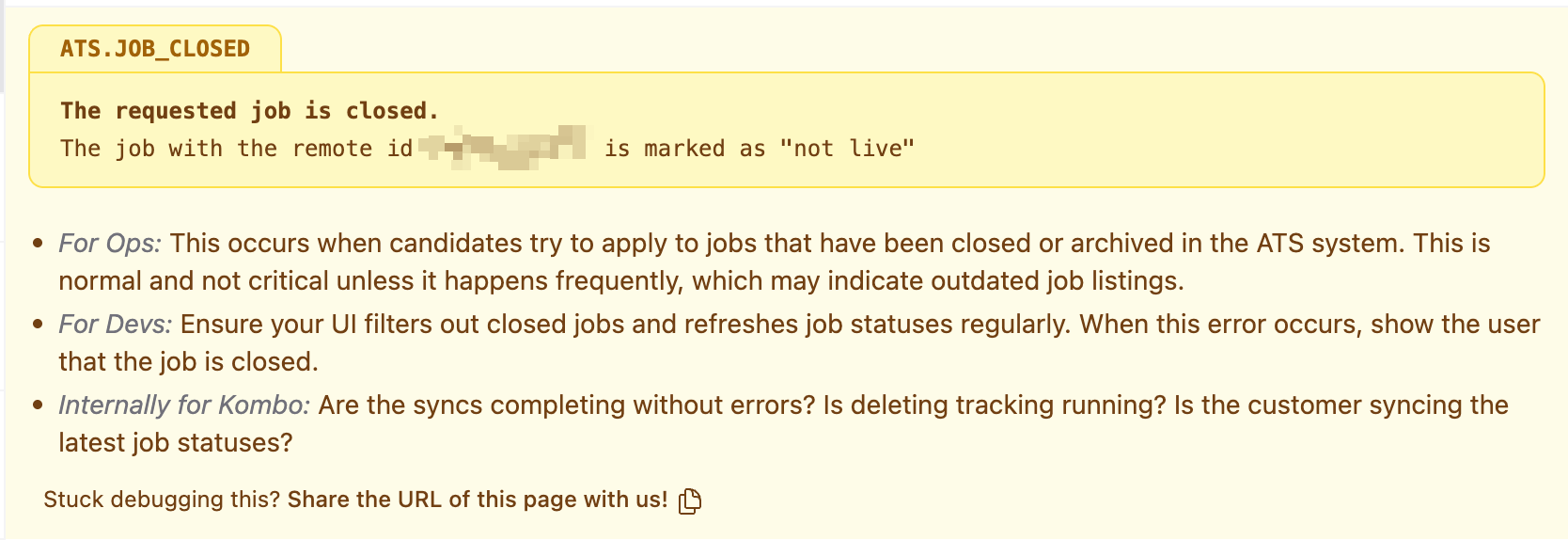 **Solution**: Check the state of the referenced records (e.g., is the `job_id` open?) before sending the action, or handle these specific error codes gracefully in your application.
### Temporary issues
If you see a `500` error or a timeout from the remote tool, it might be a temporary issue. Below is an example of how this error might look in the logs:
**Solution**: Check the state of the referenced records (e.g., is the `job_id` open?) before sending the action, or handle these specific error codes gracefully in your application.
### Temporary issues
If you see a `500` error or a timeout from the remote tool, it might be a temporary issue. Below is an example of how this error might look in the logs:
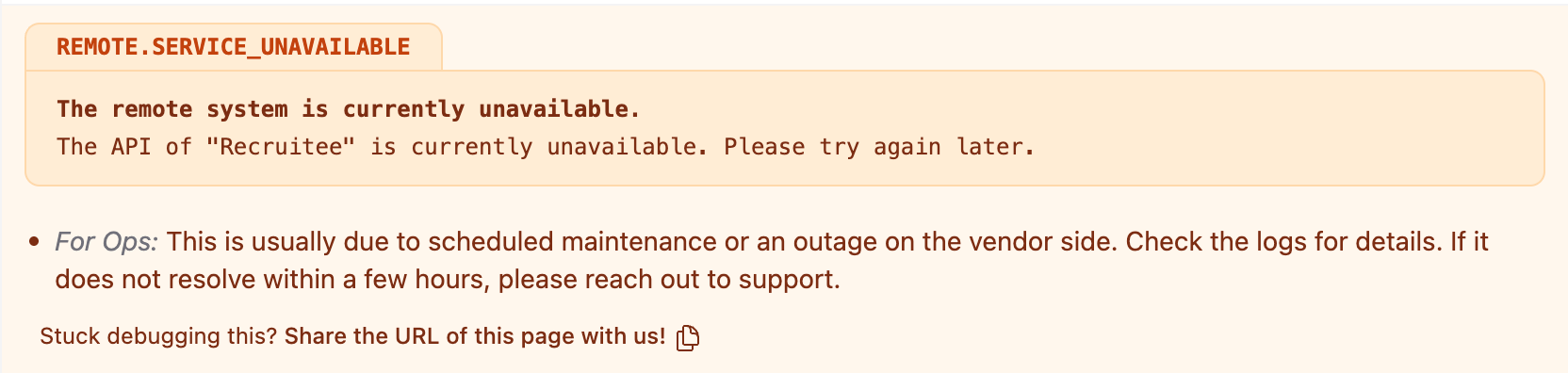 **Solution**: Try resending the action directly from the log details view.
## 4. Still not sure?
If the error is unclear or you suspect a bug in Kombo:
1. Copy the URL of the failing log entry.
2. Reach out to [Kombo support](/support).
3. Paste the link so we can look at the exact same trace you are seeing.
**Solution**: Try resending the action directly from the log details view.
## 4. Still not sure?
If the error is unclear or you suspect a bug in Kombo:
1. Copy the URL of the failing log entry.
2. Reach out to [Kombo support](/support).
3. Paste the link so we can look at the exact same trace you are seeing.